Why You Want to Pivot Right When Your Business Starts Working

Updated: 21 April 2026
You’ve been avoiding posting for weeks. Then something finally lands.
A post gets traction. Two people DM you. Someone asks about working together. Money feels closer than it has in a while. Instead of relief, your body tightens. Your mind starts scanning for what’s off. Maybe the offer needs to change. Maybe the niche is wrong. Maybe it’s time to pivot.
That’s the moment this question usually appears.
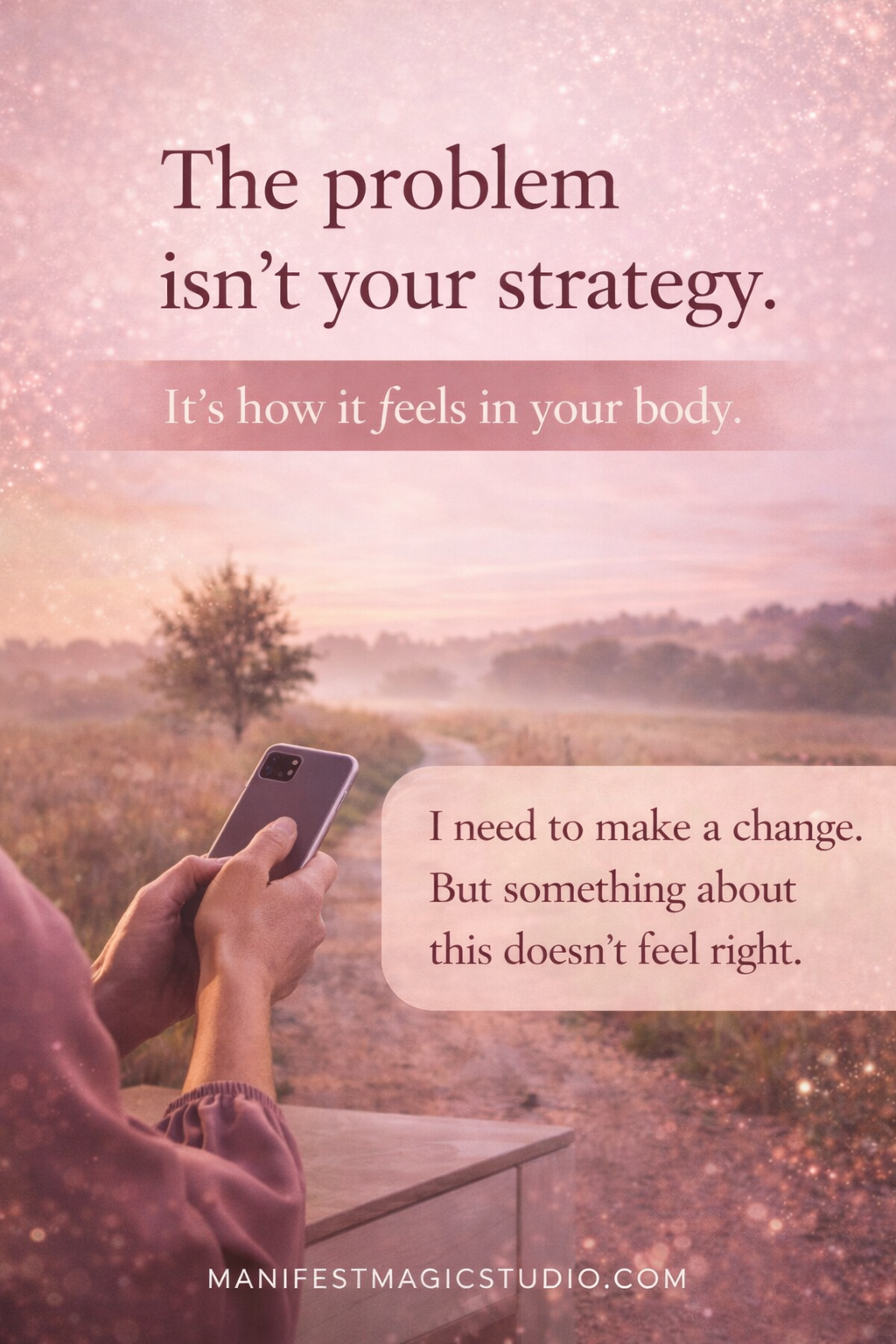
For intuitive coaches and energy healers, the urge to pivot often shows up when momentum starts asking more of your nervous system than your current level of safety can hold. Expansion can register as pressure before it registers as possibility. The instinct to change direction can feel wise in that moment, even when fear is the thing driving it.
This is where discernment matters. A fear signal and a real pivot signal can feel similar at first. Reading them clearly changes the decisions you make next.
Trusting intuition in business when success starts to feel unsafe
Most business advice misses something important. If you’re highly sensitive and intuitive, your system is picking up information all the time. You feel shifts before you have language for them. You sense what’s happening underneath the surface before your mind can explain it.
That sensitivity is part of your strength. It also means signal confusion can happen fast. Fear can sound like guidance. Real guidance can arrive with enough uncertainty that your body reads it as danger. When those states overlap, clarity gets harder to access.
Stress adds another layer. The National Institute of Mental Health explains that stress affects the brain’s ability to process information clearly and respond with nuance. In real life, that means an activated nervous system reads for threat before it reads for truth.
That’s why decisions made from activation tend to create more confusion. Regulation gives you access to discernment. From there, your signal becomes easier to read. If this has been a wider pattern for you, how to grow your business without burnout gives more context for why capacity shapes clarity.
Fear signal or real pivot signal starts with timing
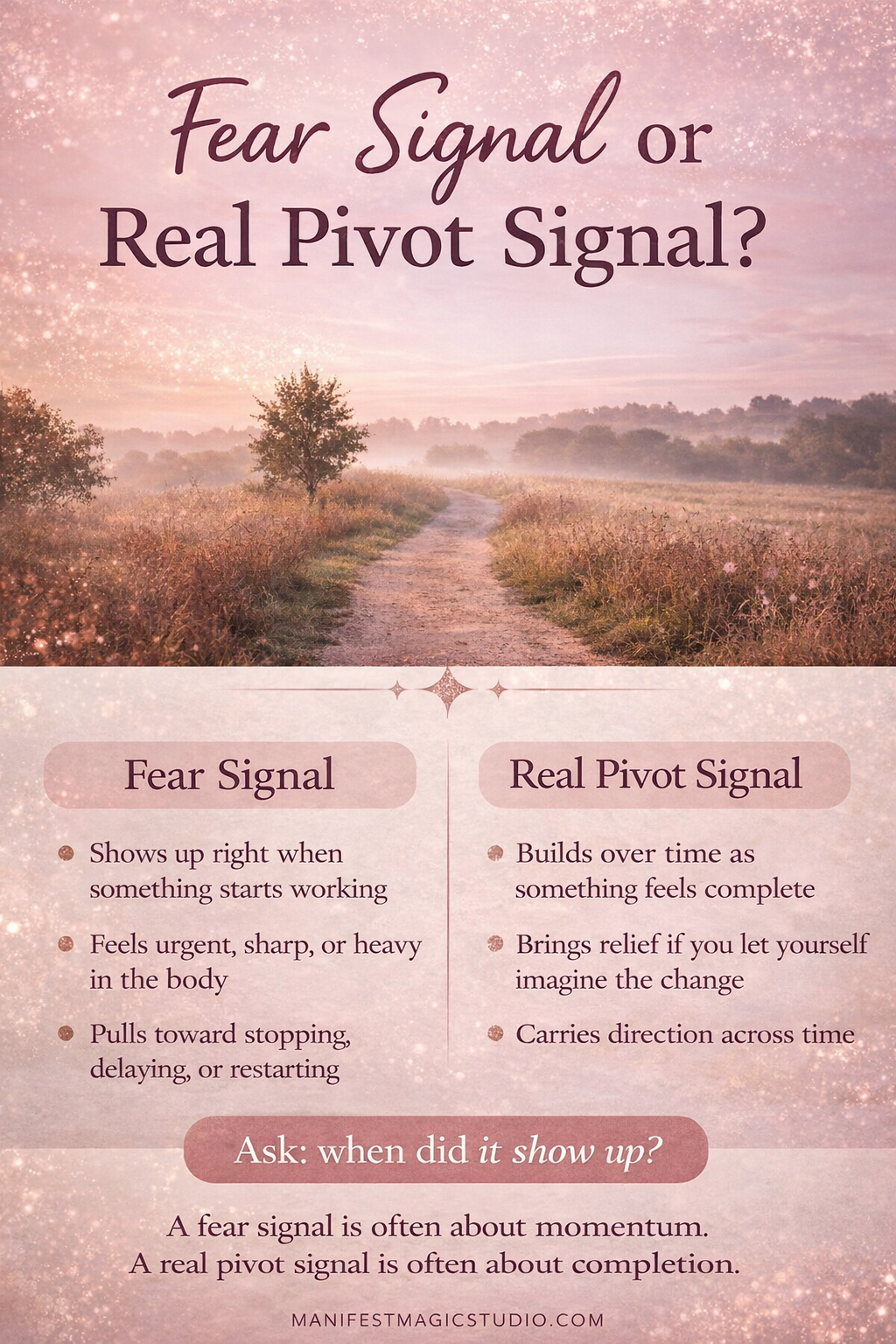
A fear signal usually shows up in response to movement.
Something begins working. You get visible. Someone reaches out. Interest increases. A conversation opens. Right as momentum starts building, your system starts searching for risk. The urge to pause, rethink, fix, or rebuild can come on fast.
The thoughts can sound persuasive. Maybe this is too much. Maybe you’re out of your depth. Maybe you need a new strategy before you go any further. Maybe you should change the offer before anyone else sees it. The wording changes. The pattern stays familiar.
In the body, fear often feels sharp and immediate. Tight chest. Shallow breathing. Mental noise. An urge to pull back and go think about everything again. It can also look productive. You start researching, planning, rewriting, reorganizing, or consuming more information. On the surface, it looks like preparation. Underneath, it’s often avoidance.
One of the clearest markers of a fear signal is this: it interrupts momentum that was already in motion.

What a real pivot signal feels like
A real pivot has a different texture.
It usually builds over time. You keep showing up. You keep doing the work. You give it room. From the outside, everything may still look fine. Inside, something has started to feel complete. The work that once felt alive now feels flat, heavy, or quiet in a way that keeps returning.
A real pivot often carries grief. That makes sense. Completion still asks you to let something go, even when the ending is correct. You may care deeply about the thing you’re outgrowing.
In the body, a real pivot often brings relief when you let yourself imagine the change. The practical parts may still feel tender. Money questions may still come up. Logistics may still ask for courage. The signal itself carries more spaciousness than urgency. There’s often an exhale around it. The truth feels steady when you come back to it.
That’s one of the strongest markers. A real pivot remains coherent across time. It stays present after rest. It stays present after regulation. It stays present when the moment settles. If you’ve been rebuilding your relationship with your own inner knowing, trusting intuition in business supports this from another angle.
A simple way to read the difference
Before you try to interpret the signal, get settled first.
You don’t need perfect calm. You do need enough regulation that your system has moved out of protection mode. That might look like taking a walk, sleeping on it, stepping away from the screen, or giving yourself a full day before making any decision.
Once you’ve got some space, ask yourself three questions.
First, when did this signal arrive? If it showed up right when something started working, treat it with care. Fear often activates when visibility, momentum, or receiving starts to feel real. If the signal has been present across weeks or months, and it keeps returning in different contexts, it deserves more weight.
Second, what does this signal ask you to do with the momentum you’ve already built? Fear usually pulls toward stopping, delaying, or starting over. A real pivot carries direction. Even when the next step isn’t fully mapped out, there’s still a sense of where the energy wants to go.
Third, how does it feel after rest? Fear loses charge when your body settles. A real pivot returns with steadiness. It waits for you. It doesn’t need to chase you down.
This framework won’t manufacture certainty on command. It will slow the reaction long enough for your actual knowing to come forward.

What this means for your business
If you’re a sensitive entrepreneur, there’s a good chance you’ve lived both sides of this.
You may have walked away from offers, ideas, or strategies that were finally gaining traction because your system read momentum as danger. You may also have stayed too long in work that had already been completed because you assumed the heaviness meant you needed more discipline or more effort.
Both experiences erode self-trust. One costs momentum. The other costs energy, clarity, and desire.
This is why discernment matters so much in business. Your decisions get cleaner when you can tell the difference between activation and truth. Your body is communicating. Your work is learning how to read the language with more accuracy.
That skill changes how long you stay stuck. It changes the relationship you have with your intuition. It changes what happens when visibility increases, when money gets closer, and when your next level starts asking you to hold more. If you want more context for how intuitive guidance supports business decisions, what Akashic Records are and how they support entrepreneurs is a strong next read.
If you’re at a crossroads right now
If you’re holding a signal right now and you can’t quite tell what it means, that’s exactly the kind of moment a Strategic Clarity Session in the Akashic Records can support.
It’s a 45-minute private session for clear, personal insight on what’s true for you right now, what’s ready to be released, and what your next step wants to be.
If a session feels supportive, you can learn more and book here: Strategic Clarity Session.

FAQ
What is the difference between a fear signal and a real pivot signal in business?
A fear signal usually appears when something starts moving. You get traction, visibility, interest, or a sales opportunity, and your system responds with urgency, tension, or a strong desire to pull back.
A real pivot signal tends to build over time. It carries a steadier kind of knowing. Instead of reacting to momentum, it reflects completion. The work feels flat across multiple moments, and the signal remains clear after rest.
Why do I want to pivot when my business starts working?
This often happens because momentum brings visibility, responsibility, and receiving closer. For many sensitive entrepreneurs, that can feel intense in the body before it feels safe.
So the urge to pivot may have less to do with strategy and more to do with nervous system activation. Your system is trying to create safety, even when the thing in front of you is actually working.
How can I tell if I’m experiencing a fear signal or a real pivot signal?
Start with timing. If the urge to change direction appeared right when something started working, treat it with care and give yourself space before making a decision.
Then look at the quality of the signal. Fear feels urgent and reactive. A real pivot feels steady and spacious. Fear pushes for retreat. A real pivot carries a clearer direction.
What does a fear signal feel like in the body?
A fear signal often feels sharp, immediate, and mentally loud. You may notice a tight chest, shallow breathing, mental spiraling, or a sudden need to stop, rethink, or rebuild everything.
It can also look productive on the surface. You may start researching, rewriting, reorganizing, or planning instead of staying with the momentum already in motion.
What does a real pivot signal feel like in the body?
A real pivot signal often feels quieter. There may still be emotion around it, especially grief or tenderness, though the deeper feeling is often relief.
When you imagine the change, your body may soften or exhale. The logistics may still feel stretching, though the direction itself feels true and steady.
Can intuition in business feel like fear?
Yes, it can. Intuition and fear can overlap in the body, especially when you’re sensitive, intuitive, and used to reading subtle cues quickly.
That’s why regulation matters. When your nervous system settles, intuition becomes easier to hear. The signal gets cleaner, and the decision becomes easier to read.
Should I make a business decision while I feel activated?
It’s wiser to pause first. You don’t need perfect calm, though you do need enough space to move out of immediate protection mode.
A walk, sleep, a day away from the screen, journaling, or a grounding practice can change the quality of the decision. Discernment gets stronger when your body feels safer.
Why does trusting intuition in business feel harder during growth?
Growth asks you to hold more. More visibility, more responsibility, more receiving, and more exposure can all bring up old patterns around safety.
That’s why trusting intuition in business can feel harder during momentum. The challenge often comes from capacity and regulation, not from a lack of wisdom.
How long should I sit with a pivot signal before acting on it?
There’s no fixed timeline, though real pivot signals tend to remain clear across time. If the signal is true, it usually stays coherent after rest, after regulation, and across different contexts.
Giving yourself space helps you separate urgency from truth. Fear loses charge when the moment settles. Real direction tends to stay.
What should I ask myself before I pivot in business?
Start with three questions. When did this signal arrive? What is it asking me to do with the momentum I’ve already built? How does it feel after rest?
Those questions slow the reaction and create room for clarity. They help you tell whether you’re responding to activation or real redirection.
Is it normal to feel afraid when things start working?
Yes, very normal. For many women entrepreneurs, success brings up as much activation as struggle because being seen, receiving more, and holding growth can feel unfamiliar.
That response doesn’t mean you’re on the wrong path. It often means your system is adjusting to a new level of visibility, support, or possibility.
When should I get outside support for a business pivot decision?
Support can help when the signal keeps circling, the decision feels loaded, or you’ve been stuck between pushing forward and pulling back for a while.
Sometimes you don’t need more information. You need clearer access to what’s actually true for you. That’s usually the moment deeper discernment support becomes useful.