How to Stay Consistent in Your Business on Low-Energy Days: A Simple Visibility System That Actually Holds
Last updated: 31 March 2026
If you’ve been searching for how to stay consistent in your business, you already know what to do. What keeps happening is that you cannot keep doing it in a way that feels steady.
You post for a few days or a few weeks, and then something shifts. Life goes to lifing, there’s a minor family emergency, and suddenly, social posting feels like too much to do. You pull back even when things were starting to work.
That experience makes sense, especially when your system expects you to feel the same every day. The deeper reason behind that pattern is explained here:
👉 Why Consistency Fails without Emotional Capacity: The Real Reason You Can’t Stay Consistent in Your Business.
Once you see that consistency is shaped by capacity, the solution becomes much simpler. You stop trying to force behavior and start building a business structure that actually holds you.
A low-energy content strategy that makes consistency feel possible again
Most advice increases pressure by adding more steps, more planning, and more output. That approach creates more decisions, which quietly drains the exact energy you need to stay visible.
Research from the American Institute of Stress shows that ongoing stress directly impacts decision-making and performance, which explains why consistency drops when your system requires constant thinking (https://www.stress.org)
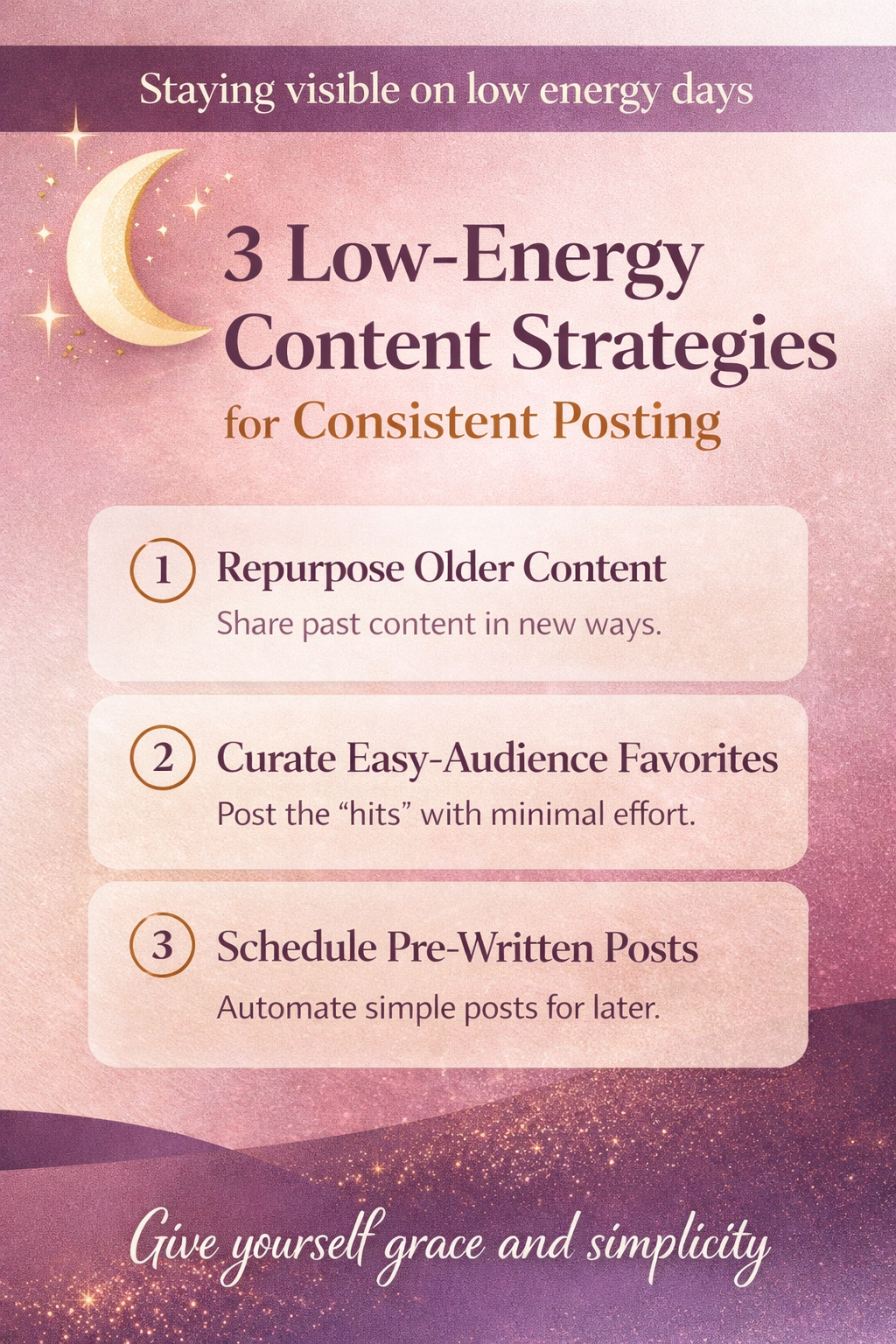
A low-energy content strategy works differently because it reduces decisions instead of adding them. The goal is to create a system that still functions on your lowest-capacity day.
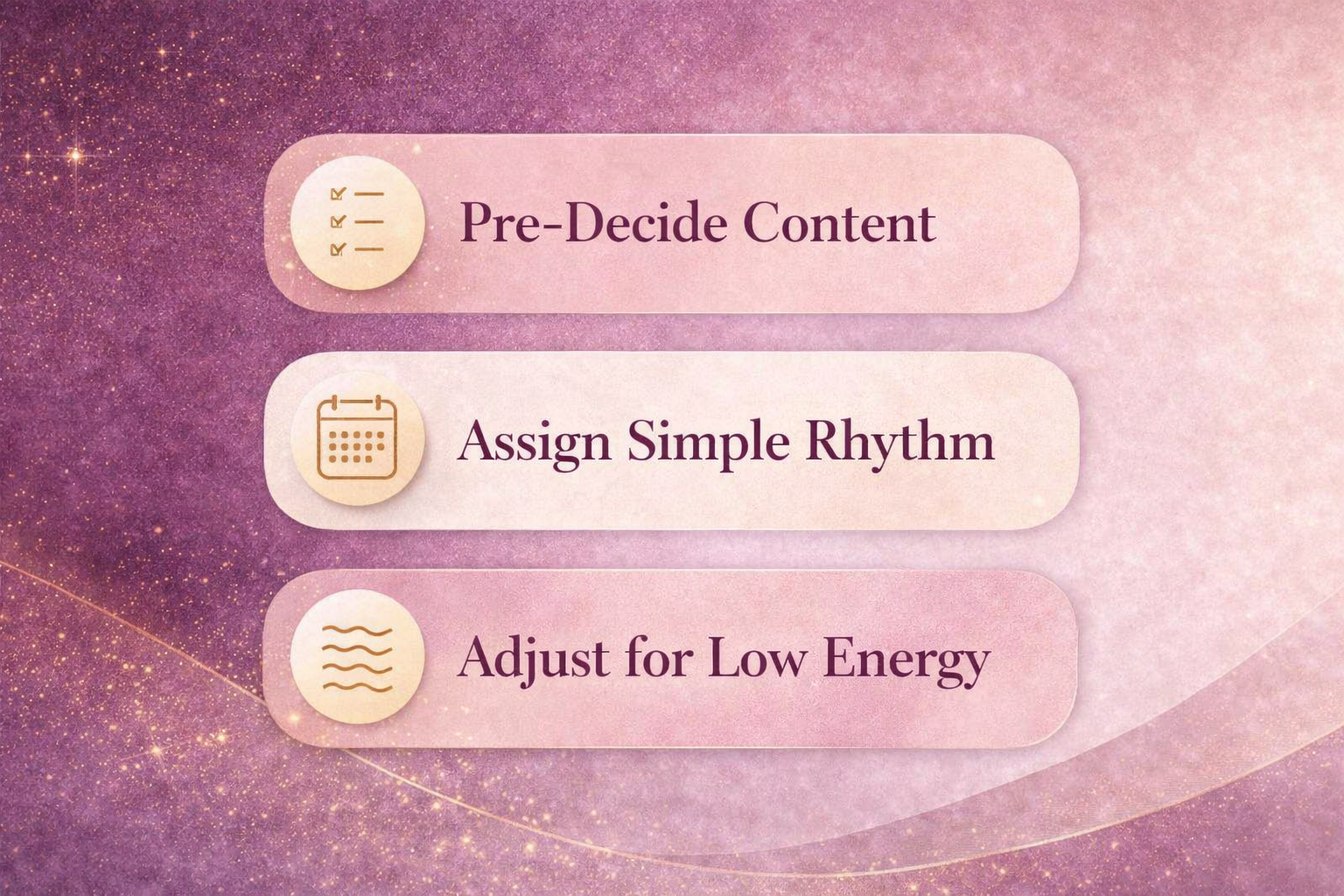
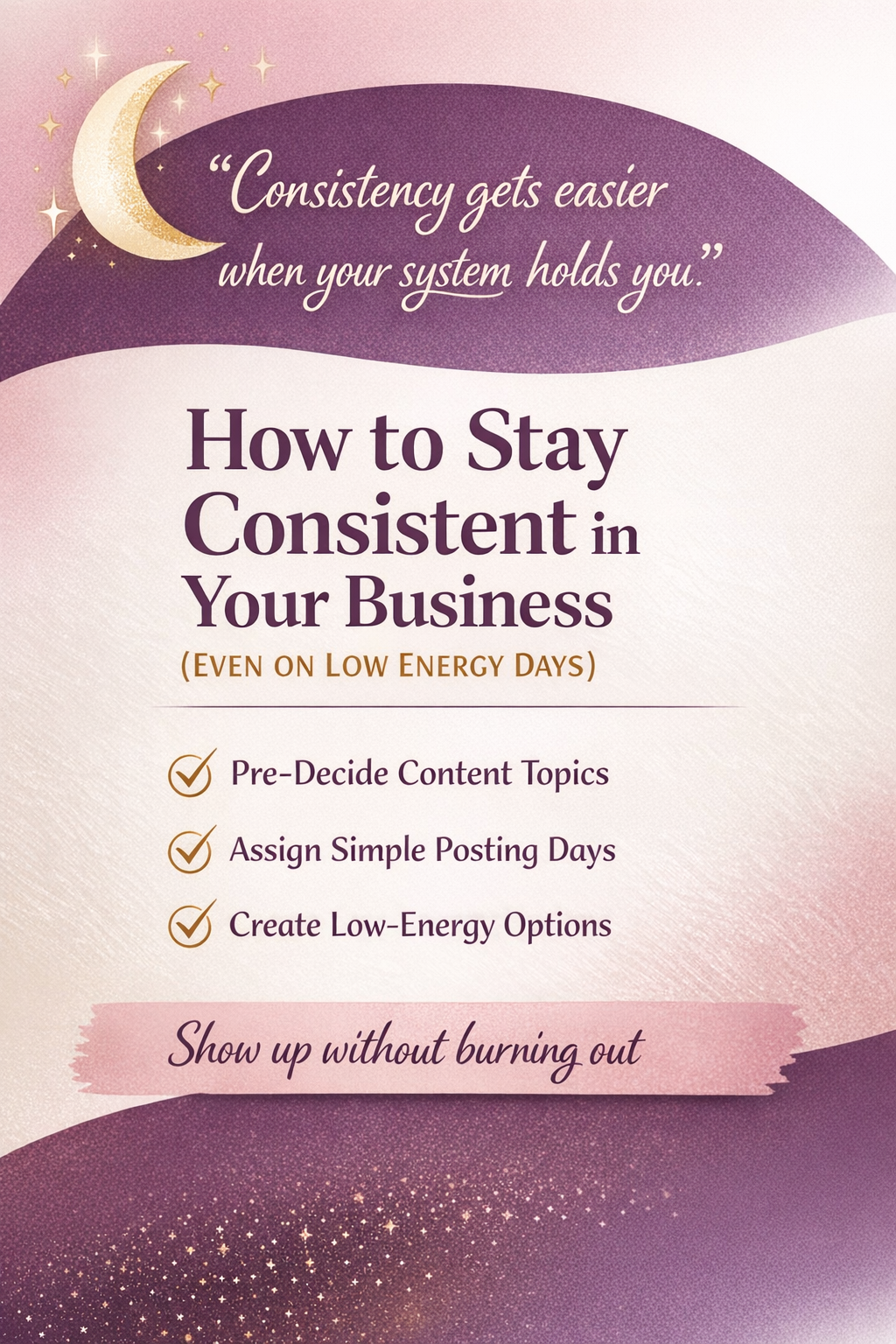
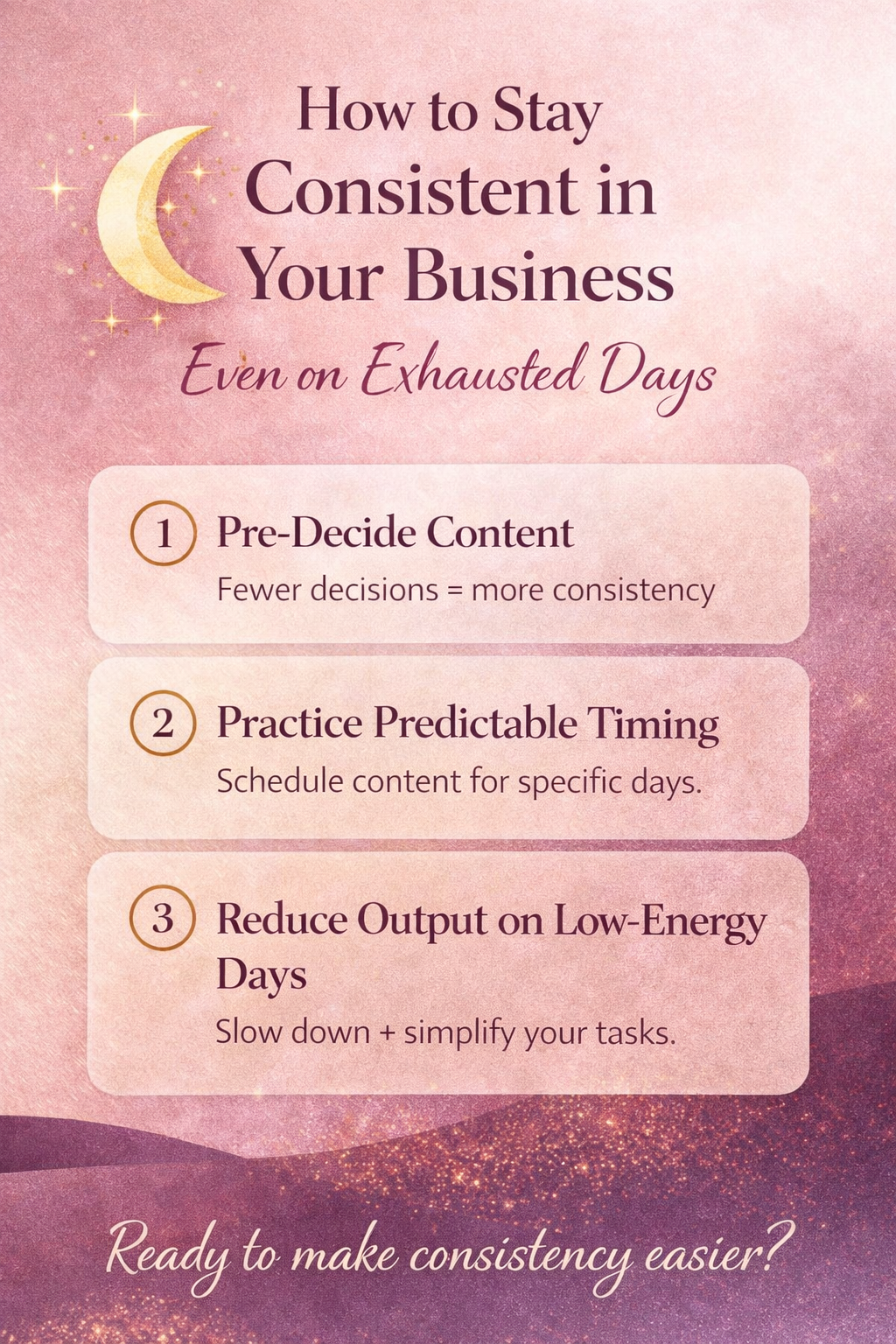
1. Pre-Decide Your Content Categories
Every time you open your phone and ask yourself what to post, your brain spends energy deciding before it even begins creating. That small moment of friction adds up faster than most people realize.
Choosing three to four content pillars or categories in advance changes that experience. Instead of creating from scratch, you are selecting from something that already exists, which feels much easier.
Your content categories are specific to your niche but broad enough to include several topics. Over time, this reduces the mental load that leads to inconsistency. You begin to feel more grounded when you sit down to create.
2. Assign Content to Specific Days
Once your categories are clear, giving them a place in your week creates a predictable rhythm. That rhythm becomes something your nervous system can rely on instead of something it has to figure out each day.
You might notice that your mind feels quieter when the decision is already made. You are no longer negotiating with yourself about what to do, which is where a lot of energy usually gets lost.
Consistency starts to feel calmer because your system is doing more of the work for you. You are simply following what has already been decided.
3. Create a Low-Energy Version of Every Task
This is where consistency becomes sustainable. Most systems assume you will always have the same level of energy, which creates pressure the moment your capacity shifts.
When you create a lower-energy version of your content, you give yourself a way to stay visible without forcing output. A shorter post, a single insight, or a simple share still maintains continuity.
This is the moment many women feel relief because they realize they do not have to disappear anymore. They can adjust without breaking their rhythm.
4. Define Your Minimum Baseline
Consistency becomes much easier when you define what it looks like on your lowest-capacity day. That baseline acts as a floor that holds you steady instead of a standard that feels out of reach.
A simple post or a single sentence insight can be enough to maintain visibility. When that baseline is realistic, you begin to rebuild trust with yourself in a way that feels calm and grounded.
This is where consistency shifts from intensity to continuity. The pressure drops, and the system starts to feel supportive.
5. Remove Daily Decision Loops
The quiet drain on your consistency often comes from repeated internal questions. Each time you ask yourself what to post or whether you should show up, you are using energy before you even begin.
A well-designed system removes those loops by answering those questions in advance. You already know what belongs on your feed, when it belongs there, and how to adjust when your energy changes.
This is what allows consistency to feel steady instead of forced. The structure holds the decisions so your nervous system does not have to.
Why this system actually works
Many content systems rely on motivation, which naturally fluctuates. This approach relies on structure, which remains steady even when your energy changes.
Most systems assume stable output and constant capacity. This system expects variation and creates space for it without disrupting your visibility.
You might start to notice that consistency feels different when it is supported instead of pushed. It becomes something you can return to, even after a low-energy day.
When you start working with a system that reduces decisions, you also begin to notice how much of your inconsistency was tied to pressure and overload. This deeper layer of sustainable growth is explored here:
👉 How to Grow Your Business Without Burnout.
What changes when your system supports you
There is a version of your business where you open your content plan and immediately know what to do. The mental noise quiets down because the decisions are already made.
You continue showing up even on the days when your energy feels lower. That steadiness builds trust with your audience and with yourself over time.
This is where visibility becomes consistent, and your income begins to stabilize. If you want to understand the deeper design behind this, the full system is explained here:
👉 The 3-Part Content System That Keeps You Visible Even When You Want to Disappear.
A simpler way to stay consistent
You are not missing discipline. You are carrying too many decisions.
When your system reduces those decisions, consistency becomes something that happens more naturally. You begin to feel supported instead of stretched.
If having that kind of support would feel lighter right now, the Social Spell Collective is designed for that. It gives you structured, done-for-you content that helps you stay visible without overthinking or forcing output.
Frequently Asked Questions
Why can’t I stay consistent in my business even when I know what to do?
You already have the knowledge. What’s happening is that your business requires too many decisions, which drains your capacity over time. When your energy drops, consistency drops with it because the structure is not holding you.
How do I stay consistent in my business when my energy is low?
You create a version of your content that matches your lowest-capacity day. That allows you to stay visible without forcing output, which keeps your momentum intact. For some of us, this looks like pre-writing a couple of posts that fit your content categories and are evergreen (can be posted anytime, not seasonal).
Do I need a content calendar to stay consistent?
A traditional content calendar often adds pressure because it assumes stable energy and fixed output. A better approach is a simple, repeatable structure with pre-decided categories and flexible execution.
An example is Mondays: a quick personal story from the weekend tied into a content category, Wednesdays: selling your best offer, and Fridays: teaching or community engagement post. Adjust as needed for energy.
What is the simplest way to stay consistent with content?
The simplest approach is to remove decisions. Make them into a simple structure instead. When you already know what to post and when to post it, consistency becomes much easier to maintain.
Why do I disappear when my business starts working?
This usually happens when growth increases pressure faster than your work structure can support it. Your nervous system reads the increase as something to manage, which can lead to pulling back for relief.
Can I really stay consistent without forcing myself?
Yes. When your work structure (like a flexible schedule) supports your capacity instead of testing it, consistency becomes something you return to naturally instead of something you push yourself into.